
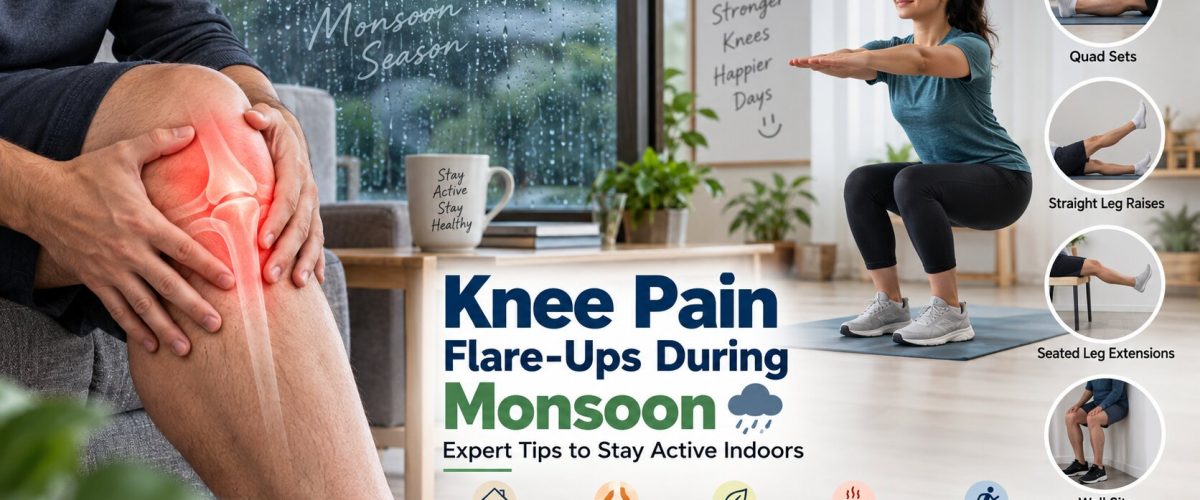
Of all the joints affected by monsoon weather, the knee is often the one patients complain about most. Whether it’s a dull ache while climbing stairs, stiffness after sitting for a while, or a sharper pain when standing up, knee flare-ups are extremely common during the rainy season — particularly for those with osteoarthritis or a history of knee injury. The good news: with the right approach, you can keep your knees strong and mobile even when stepping outside isn’t an option.

Why Are Knees Especially Sensitive During Monsoon?
The knee is a weight-bearing joint with a relatively thin layer of protective cartilage, which makes it particularly reactive to the pressure and humidity changes that come with monsoon weather. In joints where cartilage has already worn down — as in osteoarthritis — even small changes in barometric pressure can increase fluid pressure within the joint, leading to more noticeable stiffness and discomfort.
Reduced walking and outdoor activity during heavy rain compounds the issue, as the muscles supporting the knee — particularly the quadriceps — weaken slightly with inactivity, offering less support to the joint itself.
Common Causes of Monsoon Knee Flare-Ups
- Osteoarthritis, where existing cartilage wear becomes more symptomatic with pressure and humidity changes
- Old ligament injuries (such as ACL or MCL tears), where scar tissue is more reactive to weather
- Previous meniscus tears, which can cause intermittent swelling that’s more noticeable during monsoon
- Weight gain from reduced activity, adding extra load to the knee joint
- General deconditioning of the muscles supporting the knee due to a less active routine
Indoor Exercises to Keep Knees Strong and Mobile
You don’t need outdoor space or gym equipment to keep your knees active during monsoon. These low-impact exercises can be done safely at home:
1. Quad Sets
Sit with your leg extended, tighten the thigh muscle, and hold for 5 seconds before releasing. This strengthens the quadriceps without putting stress on the joint itself.
2. Straight Leg Raises
Lying down, keep one leg bent and slowly raise the other straight leg to hip height, hold briefly, then lower. This builds strength around the knee without bending the joint.
3. Seated Leg Extensions
While seated in a chair, slowly extend one knee until the leg is straight, then lower with control. Repeat 10-15 times per leg.
4. Wall Sits (for those without significant pain)
Lean against a wall with knees bent at a comfortable angle and hold the position for 15-20 seconds, building endurance in the surrounding muscles.
5. Stationary Cycling or Step-Ups
If you have access to a stationary bike, low-resistance cycling is excellent for keeping the knee joint mobile with minimal impact.
6. Gentle Yoga Poses
Poses like a supported chair pose or gentle stretches for the hamstrings and calves can help maintain flexibility around the knee without strain.
Dos and Don’ts for Monsoon Knee Care
- Do: warm up with light movement before starting any exercise, even indoors.
- Do: use a warm compress on stiff knees, particularly in the morning.
- Do: wear supportive, cushioned footwear even at home if you’re on your feet often.
- Don’t: sit in one position for extended periods without moving.
- Don’t: push through sharp or worsening pain during exercise — mild discomfort during activity is different from pain that escalates.
- Don’t: skip your prescribed physiotherapy exercises just because the weather is inconvenient.
Diet Tips to Support Knee Health
An anti-inflammatory diet can meaningfully support joint comfort during flare-up-prone months. Focus on omega-3 rich foods, turmeric, ginger, and adequate hydration, while moderating salt and processed food intake, which can contribute to fluid retention and joint swelling.
When to Consult an Orthopaedic Surgeon
While mild, seasonal knee stiffness is common and manageable, certain signs warrant a proper evaluation:
- Persistent swelling that doesn’t reduce with rest
- Pain that significantly limits walking or daily activities
- A sensation of the knee “locking” or “giving way”
- Pain that continues to worsen despite home management over several weeks
Frequently Asked Questions
Is it safe to exercise if my knee already hurts? Gentle, low-impact movement is usually beneficial and often reduces stiffness over time. The key is choosing exercises that don’t cause sharp pain, and stopping if discomfort escalates.
Should I use a knee brace during monsoon flare-ups? A brace can help provide support during flare-ups, but it’s best used under guidance from your orthopaedic doctor rather than as a long-term substitute for strengthening exercises.
Does knee pain during monsoon mean my arthritis is getting worse? Not necessarily. Weather-related flare-ups are often temporary and don’t always indicate disease progression, but recurring or worsening episodes are worth discussing with your doctor.
Conclusion
Monsoon doesn’t have to mean weeks of knee stiffness and reduced activity. With the right combination of targeted indoor exercises, sensible precautions, and attention to diet, most people can manage seasonal knee flare-ups effectively and stay active through the rainy months.
Struggling with knee pain this monsoon? Consult Dr. (Prof.) Amit Kumar Agarwal for a personalised assessment and a knee-care plan suited to your specific condition.