
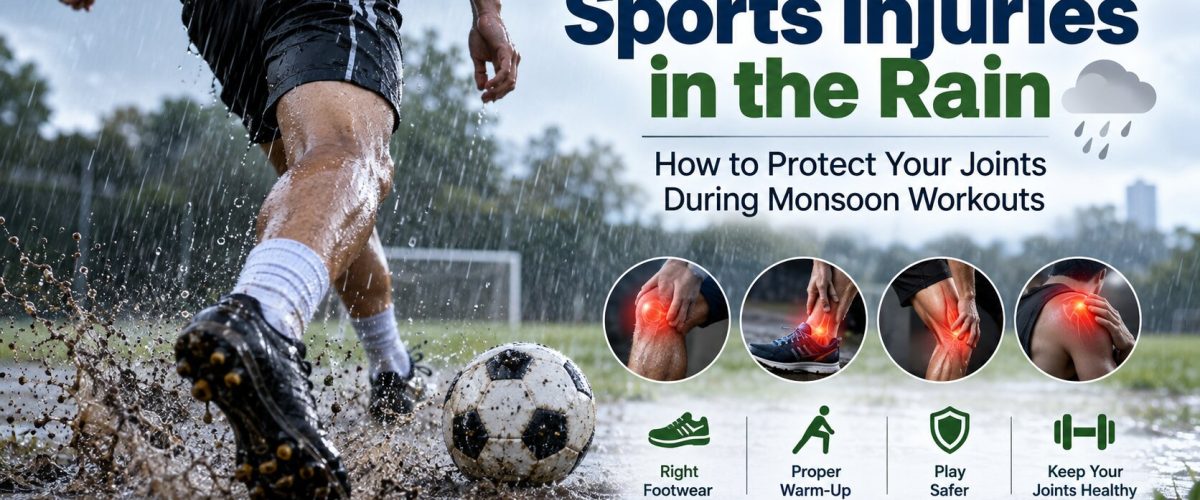
For sports enthusiasts, monsoon doesn’t always mean staying indoors — many people continue their football matches, morning runs, and outdoor training sessions right through the rainy season. But playing or exercising in wet conditions comes with a meaningfully higher risk of joint and muscle injury, and knowing how to adapt your routine can make the difference between an enjoyable season and a trip to the orthopaedic clinic.
Why Monsoon Increases Sports Injury Risk
- Wet, slippery playing surfaces reduce traction, increasing the chance of slips and awkward landings.
- Reduced visibility during heavy rain makes it harder to judge uneven ground, potholes, or other players’ movements.
- Cold, damp conditions mean muscles and ligaments are naturally less flexible if not properly warmed up.
- Waterlogged fields and tracks change the way the body absorbs impact, placing extra strain on the knees and ankles.
- Players and runners are often less cautious than they should be, underestimating how much conditions have changed.
Common Monsoon Sports Injuries
- ACL and other ligament tears, from sudden directional changes on a slippery surface
- Ankle sprains, one of the most frequent injuries when running or playing on wet, uneven ground
- Hamstring and calf strains, more likely when muscles haven’t been adequately warmed up in cooler, damp weather
- Shoulder dislocations or fractures, typically from falls during contact sports
- Meniscus tears, often resulting from a sudden twist of the knee while the foot is planted
Pre-Workout Precautions
1. Extend Your Warm-Up
Cooler, damp weather means muscles take longer to loosen up. Extend your usual warm-up routine by 5-10 minutes, focusing on dynamic stretches for the hamstrings, calves, and hip flexors.
2. Choose the Right Footwear
Studs or shoes designed for wet-weather grip make a significant difference on wet grass or synthetic turf. Avoid using worn-out shoes with smooth soles for outdoor training during monsoon.
3. Check the Playing Surface
Before starting, walk the area to check for standing water, slippery patches, or uneven ground that wasn’t visible from a distance.
4. Stay Hydrated
It’s easy to underestimate fluid loss in cooler, humid weather, but dehydration still increases the risk of muscle cramps and strains during physical activity.
During-Workout Safety Tips
- Avoid sudden sprints or sharp direction changes on visibly wet or muddy patches.
- Reduce overall intensity slightly compared to dry-weather sessions, particularly for high-impact sports.
- Communicate with teammates about slippery zones on the field.
- Stop immediately if you feel your footing repeatedly slipping — this is a clear sign conditions are unsafe.
First Aid for Common Sports Injuries: The RICE Method
For minor sprains and strains sustained during a rainy-season workout, the RICE method remains an effective first response:
- Rest: stop activity immediately and avoid putting weight on the injured area
- Ice: apply a cold compress for 15-20 minutes to reduce swelling
- Compression: use an elastic bandage to help control swelling, without wrapping too tightly
- Elevation: raise the injured limb above heart level where possible
When to See a Sports or Orthopaedic Specialist
Not every strain requires a clinic visit, but you should seek professional evaluation if you notice:
- Significant swelling or bruising that develops quickly
- Inability to bear weight or continue movement
- A popping sensation at the time of injury, often associated with ligament tears
- Pain and swelling that don’t improve within 48-72 hours of first aid
- Instability in the joint during normal movement
Frequently Asked Questions
Is it safer to just move all outdoor workouts indoors during monsoon? For high-impact or contact sports on genuinely wet, slippery surfaces, indoor alternatives are safer. For running or light training, outdoor activity can continue with the right precautions and footwear.
How do I know if it’s a sprain or something more serious like a ligament tear? A popping sound at the time of injury, significant swelling, or a feeling of the joint “giving way” are signs that suggest more than a simple sprain and warrant a proper evaluation rather than self-diagnosis.
Can old sports injuries flare up again during monsoon workouts? Yes — previously injured ligaments and joints tend to be more sensitive to weather changes and are also statistically more likely to be re-injured, so extra caution is warranted for these areas.
Conclusion
Staying active during monsoon is entirely possible for sports enthusiasts, provided you adapt your routine to the conditions — better footwear, longer warm-ups, and a bit more caution around wet surfaces go a long way in preventing injury. When an injury does occur, prompt first aid and timely evaluation make recovery faster and more complete.
Nursing a sports injury from your monsoon workouts? Consult Dr. (Prof.) Amit Kumar Agarwal for an expert evaluation and a recovery plan that gets you back to your sport safely.