
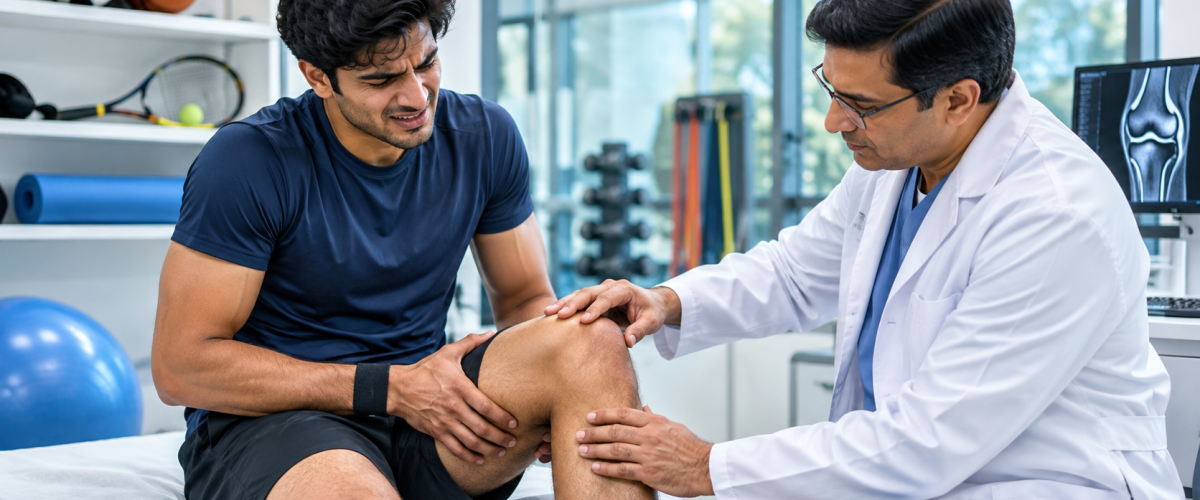
It usually happens in a second. A sharp turn on the football field, a bad landing in basketball, a slip on the badminton court, and suddenly your knee does not feel like yours. Some injuries settle with a few days of rest. Others linger, swell, or leave the joint feeling unreliable, and that is when people start searching for a sports medicine specialist in Delhi.
This guide is for athletes and active people alike. It covers the injuries that most often affect the knees and joints, how they are diagnosed, the surgical and non-surgical routes to recovery, and what to expect when you visit Dr. Prof. Amit Kumar Agarwal at Indraprastha Apollo Hospitals, New Delhi, for a sports injury assessment.
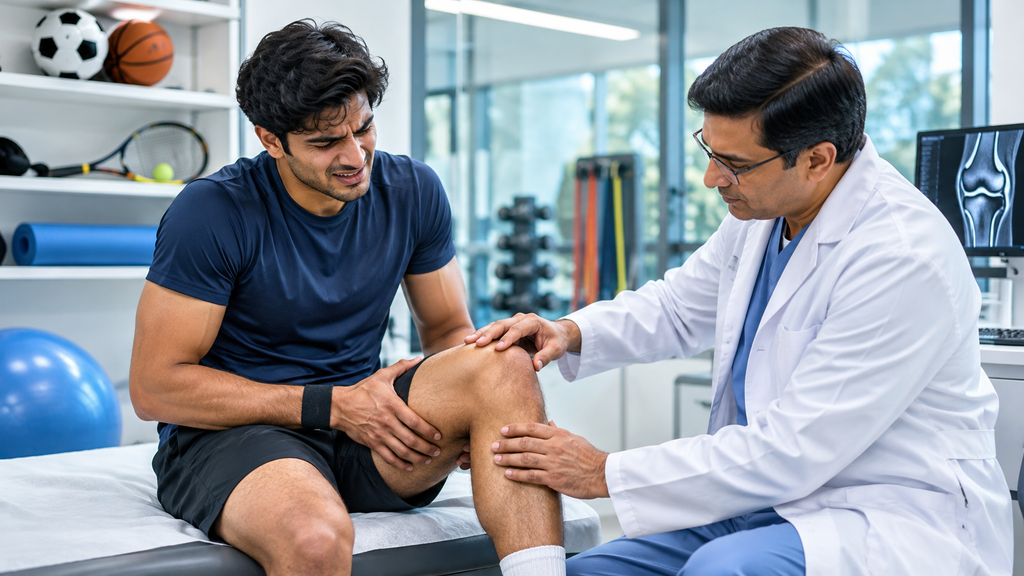
What Is Sports Medicine?
Sports medicine is a branch of care that focuses on injuries linked to physical activity, and on helping people return to movement safely. In orthopedics, it centres on the muscles, tendons, ligaments, cartilage, and joints that take the strain when you run, jump, throw, or change direction.
It is not only for professionals. Recreational runners, gym-goers, cricketers, cyclists, and people who started a fitness routine after years at a desk all end up in sports injury clinics. The approach is similar for everyone: find out what has been damaged, treat it appropriately, and rebuild strength so the injury is less likely to come back.
Prevention is part of the job too. Good warm-ups, enough recovery time between sessions, supportive footwear, and strength work for the hips, thighs, and core can reduce the chance of getting hurt in the first place. A specialist can also look at how you move and suggest adjustments before a small niggle becomes a real injury.
Common Sports Injuries That Affect the Knees and Joints
The knee is one of the most frequently injured joints in sport because it takes both load and twisting forces. Some of the usual problems are:
- Ligament injuries, including tears of the ACL, MCL, and other knee ligaments
- Meniscus tears, which affect the cartilage cushions inside the knee
- Patellar problems, such as pain around the kneecap or a kneecap that slips out of position
- Tendon injuries, like runner’s or jumper’s knee
- Shoulder and elbow problems, including shoulder instability and tennis elbow
- Ankle sprains and overuse injuries in the foot or shin
A common mistake is to play through the pain. A joint that is repeatedly stressed after an injury can sustain further damage, and what could have been a straightforward recovery becomes a longer one.
ACL Injuries and Meniscus Tears
These two injuries come up so often that they deserve their own section.
ACL injuries. The anterior cruciate ligament sits in the centre of the knee and keeps it stable during pivoting and landing. An ACL tear often happens with a sudden change of direction or an awkward landing, sometimes with a popping sound. The knee typically swells within hours and may feel unsteady afterwards. People who wish to keep playing sports that involve cutting or pivoting are often advised to consider reconstruction, while others may manage well with rehabilitation alone. The right choice depends on age, activity level, and how the knee behaves day to day.
Meniscus tears. The meniscus acts as a shock absorber. Tears can occur with a twisting injury, or gradually with age. Symptoms include pain along the joint line, swelling, catching, or a feeling that the knee locks. Some tears can be treated with rehabilitation, while others, depending on the pattern and location, may benefit from repair or trimming through keyhole surgery.
It is not unusual to have both injuries together, which is one reason a careful examination matters.
How Are Sports Injuries Diagnosed?
Diagnosis begins with a conversation. How did the injury happen? Did you hear a pop? Could you carry on? Does the knee swell, lock, or give way? This history tells an experienced orthopedic surgeon a lot before any scan is done.
A physical examination follows, where the joint is checked for swelling, range of motion, tenderness, and stability using specific tests. X-rays are often used to rule out fractures and look at the bone. An MRI may be advised to see ligaments, cartilage, and the meniscus in detail. Not everyone needs every test, and the investigations ordered should match the question being asked.
Consider seeking an assessment promptly if there was immediate swelling after an injury, if you cannot put weight on the leg, if the joint feels unstable, or if pain has not improved after a week or two.
In the first day or two after a fresh injury, resting the joint, applying ice wrapped in a cloth for short periods, using gentle compression, and keeping the limb raised can help with swelling. Avoid forcing the joint to “test” it, and avoid heavy massage over a swollen, painful area. These are first-aid measures, not a substitute for an assessment if the injury is significant.
Surgical and Non-Surgical Sports Injury Treatment
Many sports injuries do not need an operation. Mild ligament sprains, some meniscus tears, and overuse injuries often respond to a period of relative rest, a graded exercise programme, physiotherapy, and sensible changes in training. Medication and, in selected cases, injections may help to manage pain and inflammation.
Surgery becomes part of the discussion when the joint remains unstable, when a structure that cannot heal on its own has been torn, or when symptoms like locking continue despite rehabilitation. Modern procedures are often carried out arthroscopically, through small incisions with a camera and fine instruments, which generally allows a gentler recovery than open surgery. Not every case is suitable for this, and your surgeon will explain why a particular approach is recommended.
A good plan also considers timing. Some injuries do best with early surgery, while others benefit from a period of rehabilitation first. This is another reason to get checked early rather than waiting for the pain to disappear. You can find more detail on our knee treatment page.
Rehabilitation and Return to Sports
Whether or not you have surgery, rehabilitation is where much of the recovery happens. It usually moves through stages: settling pain and swelling, restoring movement, rebuilding strength, then practising balance, agility, and sport-specific movements.
Returning to sport should depend on how the joint performs, not only on the calendar. After an ACL reconstruction, for example, a return to competitive play usually takes many months, and strength and stability tests are often used to judge readiness. Going back too soon is one of the commonest reasons for re-injury.
Rehab works best when you treat it as part of the treatment, not as an afterthought. Showing up for physiotherapy, doing the home exercises, and following the surgeon’s advice on loading will help you far more than any shortcut.
Mental readiness counts as well. Many athletes find that confidence returns more slowly than strength, especially after a serious injury. Gradual exposure to sport-specific movements, with guidance, helps rebuild trust in the joint.
Sports Injury Consultation at Indraprastha Apollo Hospitals
Dr. Prof. Amit Kumar Agarwal consults at Indraprastha Apollo Hospitals, Sarita Vihar, New Delhi, where imaging and rehabilitation services are available within the hospital. A sports injury consultation involves a discussion about how the injury happened, an examination, a review of any scans you bring, and a talk about suitable treatment and what recovery is likely to involve. Add verified qualifications and sports injury experience here.
Learn more on the doctor’s profile page, explore related sports injury services, or book through the appointment page or by calling verified phone number. Bring any previous scans and a short note describing your injury and the activities you want to return to.
Frequently Asked Questions
Can a torn ACL heal without surgery?
A completely torn ACL does not usually heal by itself, but some people manage well with rehabilitation, especially if they do not play pivoting sports. The decision depends on your knee stability and goals.
How do I know if I have a meniscus tear?
Pain on the inner or outer side of the knee, swelling, catching, and locking are typical signs. An examination and MRI can confirm it.
Should I rest or keep exercising after an injury?
Rest the joint for the first few days and avoid activities that cause pain. If you cannot walk comfortably or the knee feels unstable, get it assessed before returning to sport.
When can I return to sport after surgery?
It varies by injury and procedure. Your surgeon and physiotherapist will advise based on healing and strength, not just time.
Can I prevent sports injuries?
You cannot remove the risk entirely, but warming up, building strength gradually, wearing the right footwear, and allowing recovery time between sessions all reduce it.
Hurt while playing? Consult Dr. Prof. Amit Kumar Agarwal for an orthopedic assessment of your sports injury and guidance on suitable treatment options.