
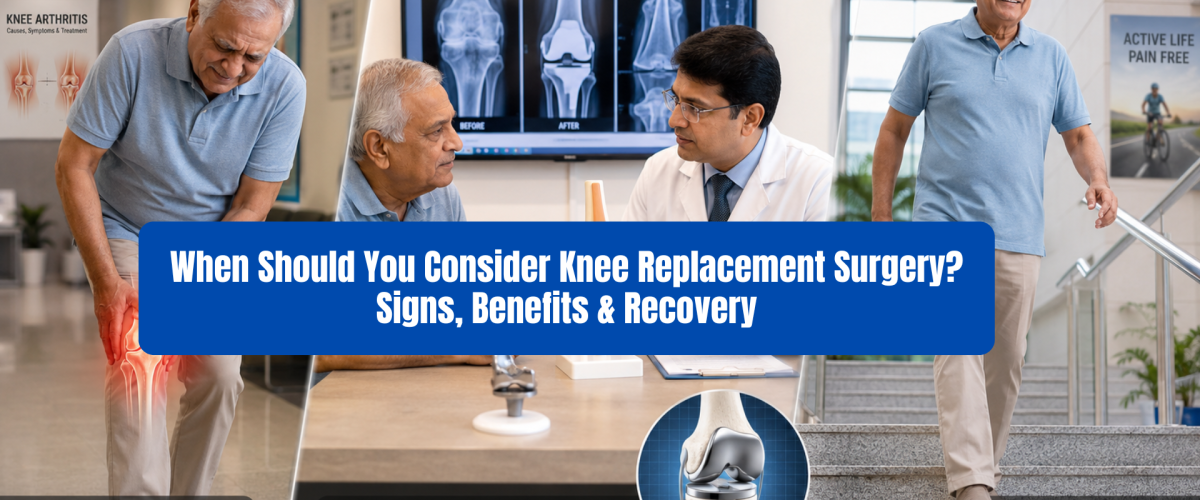
Knee pain is one of the most common orthopedic problems affecting adults, especially individuals over the age of 50. While occasional knee discomfort may result from overuse or minor injuries, persistent knee pain can significantly impact daily activities and quality of life. Simple tasks such as walking, climbing stairs, standing for long periods, or even getting out of bed may become challenging.
For many patients, medications, physiotherapy, lifestyle modifications, and injections provide temporary relief. However, when these treatments fail to control symptoms and knee damage becomes severe, knee replacement surgery may be the most effective solution.
Understanding when to consider knee replacement surgery can help patients make informed decisions and regain mobility before their condition worsens.
What Is Knee Replacement Surgery?
Knee replacement surgery, also known as knee arthroplasty, is a surgical procedure in which damaged portions of the knee joint are replaced with artificial implants designed to restore function and reduce pain.
The procedure is commonly recommended for patients suffering from severe arthritis, advanced joint degeneration, or significant knee damage that limits mobility and affects daily life.
Modern knee replacement techniques have evolved significantly over the years, offering better outcomes, improved implant durability, faster recovery, and enhanced patient satisfaction.
Common Conditions That Lead to Knee Replacement
Several medical conditions can gradually damage the knee joint and eventually require surgical intervention.
Osteoarthritis
Osteoarthritis is the most common reason patients undergo knee replacement surgery. It occurs when the protective cartilage covering the ends of bones gradually wears away, causing pain, stiffness, swelling, and reduced mobility.
As the condition progresses, bones begin rubbing against each other, leading to chronic discomfort and joint deformity.
Rheumatoid Arthritis
Rheumatoid arthritis is an autoimmune disorder that causes chronic inflammation within the joints. Over time, this inflammation can destroy cartilage and bone structures, resulting in severe knee damage.
Patients with advanced rheumatoid arthritis often experience persistent pain and limited function despite medical treatment.
Post-Traumatic Arthritis
Serious knee injuries such as fractures, ligament tears, or meniscal damage may eventually lead to arthritis years later.
Patients who have experienced significant knee trauma may develop progressive degeneration that ultimately requires joint replacement.
Knee Deformities
Some individuals develop bow-legged or knock-kneed deformities due to arthritis progression or structural abnormalities. Severe deformities can alter weight distribution within the joint, accelerating wear and causing disabling symptoms.
Signs You May Need Knee Replacement Surgery
Many patients continue to live with severe knee pain for years without realizing that surgical treatment may be appropriate.
The following symptoms may indicate the need for knee replacement surgery.
Persistent Knee Pain
Pain that continues despite medications, physiotherapy, and lifestyle changes should not be ignored.
If knee pain affects your ability to walk comfortably, sleep peacefully, or perform daily activities, it may indicate advanced joint damage.
Difficulty Walking
Many patients notice that they can no longer walk long distances without experiencing severe pain.
If routine activities such as grocery shopping, visiting friends, or walking around the neighborhood become increasingly difficult, further evaluation may be necessary.
Pain During Rest
Knee pain is often worse during physical activity. However, advanced arthritis can cause pain even while sitting or lying down.
Pain that interferes with sleep is a strong indicator that the condition has progressed significantly.
Joint Stiffness
Patients frequently report difficulty bending or straightening the knee.
Morning stiffness or stiffness after prolonged sitting may become increasingly severe as arthritis progresses.
Swelling and Inflammation
Recurring swelling that does not improve with medication or rest can indicate ongoing joint degeneration.
Persistent inflammation may limit movement and increase discomfort.
Reduced Quality of Life
When knee pain prevents participation in hobbies, family activities, work responsibilities, or exercise routines, treatment options should be reconsidered.
The goal of knee replacement surgery is not only pain relief but also restoring independence and quality of life.
When Conservative Treatments Are No Longer Effective
Before recommending surgery, orthopedic specialists typically explore non-surgical treatment options.
These may include:
- Pain medications
- Anti-inflammatory medications
- Physical therapy
- Weight management programs
- Activity modification
- Knee braces
- Corticosteroid injections
- Hyaluronic acid injections
When these treatments fail to provide adequate relief and symptoms continue to worsen, surgery becomes a viable option.
Benefits of Knee Replacement Surgery
Knee replacement surgery offers several advantages for suitable candidates.
Significant Pain Relief
Most patients experience dramatic improvement in pain levels following recovery.
Chronic pain that once limited daily activities often becomes minimal or disappears entirely.
Improved Mobility
Patients can typically return to walking, climbing stairs, and performing routine tasks with greater ease.
Improved mobility contributes to overall health and independence.
Better Quality of Life
Pain-free movement allows patients to enjoy hobbies, social activities, travel, and family events without constant discomfort.
Enhanced Sleep Quality
Many individuals report better sleep after surgery because nighttime pain is significantly reduced.
Long-Term Results
Modern knee implants are designed to last many years.
With appropriate care, many patients enjoy excellent function and durability for decades.
What Happens During Knee Replacement Surgery?
The procedure involves removing damaged cartilage and bone from the knee joint and replacing them with specially designed implants.
The artificial components recreate smooth joint surfaces, allowing the knee to move comfortably and efficiently.
Advancements in surgical techniques have improved precision and reduced recovery times.
Recovery After Knee Replacement Surgery
Recovery varies among individuals, but most patients follow a structured rehabilitation program.
First Few Days
Patients are encouraged to begin gentle movement shortly after surgery.
Early mobilization helps reduce complications and promotes healing.
First Few Weeks
Physical therapy plays a crucial role during this stage.
Exercises focus on improving strength, flexibility, and walking ability.
Three to Six Months
Most patients achieve substantial improvement within this period.
Daily activities become easier, and pain levels continue to decrease.
Long-Term Recovery
Full recovery may take up to one year, depending on individual health factors and commitment to rehabilitation.
Who Is a Good Candidate for Knee Replacement?
You may be a suitable candidate if:
- You have severe knee arthritis.
- Conservative treatments have failed.
- Pain interferes with daily life.
- Walking has become difficult.
- Knee stiffness limits movement.
- Imaging studies show advanced joint damage.
An orthopedic specialist can determine whether surgery is the most appropriate option.
How to Prepare for Knee Replacement Surgery
Preparation plays an important role in achieving successful outcomes.
Patients are often advised to:
- Maintain a healthy weight.
- Stay physically active.
- Strengthen surrounding muscles.
- Manage medical conditions such as diabetes and hypertension.
- Arrange support during recovery.
Following your surgeon’s recommendations can improve both surgical outcomes and recovery speed.
Expert Guidance Matters
Choosing an experienced orthopedic surgeon is one of the most important decisions when considering knee replacement surgery.
A comprehensive evaluation, accurate diagnosis, personalized treatment planning, and ongoing support throughout recovery contribute significantly to long-term success.
At Orthopaedic & Spine Clinic, patients receive individualized care tailored to their condition, lifestyle, and treatment goals under the guidance of Dr. Prof. Amit Kumar Agarwal, Senior Orthopaedic & Spine Surgeon with extensive experience in joint replacement and advanced orthopedic procedures.
Conclusion
Living with chronic knee pain can affect every aspect of life, from mobility and independence to emotional well-being. While non-surgical treatments can help many patients, severe arthritis and progressive joint damage may eventually require knee replacement surgery.
Recognizing the warning signs early and consulting an experienced orthopedic specialist can help you make informed decisions about your treatment options.
If persistent knee pain is preventing you from enjoying daily activities, seeking professional evaluation may be the first step toward lasting relief, improved mobility, and a better quality of life.