
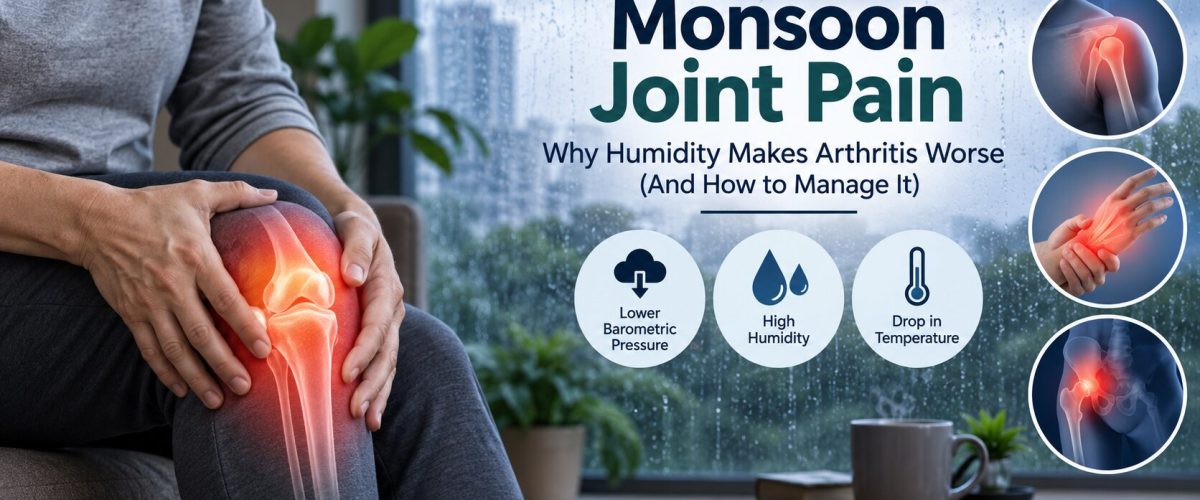
For millions of people across Delhi-NCR, the arrival of the monsoon doesn’t just mean umbrellas and traffic jams — it also means the return of a familiar ache in the knees, hips, and shoulders. If you’ve ever noticed your joints feeling stiffer, more swollen, or simply “heavier” during the rainy season, you’re not imagining it. There is a real, physiological reason why monsoon and humidity worsen arthritis and joint pain, and understanding it is the first step toward managing it effectively.
Why Does Monsoon Trigger Joint Pain?
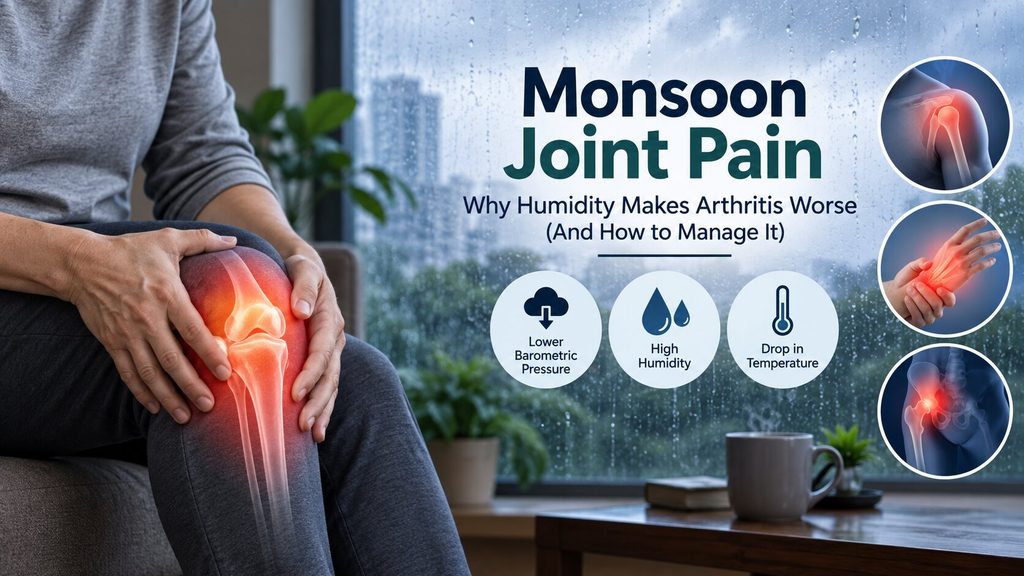
Joint pain that flares up with the weather isn’t a myth passed down from grandparents — it has genuine medical backing. During the monsoon, three factors converge to make joints more sensitive:
- A sudden drop in barometric (atmospheric) pressure before and during rain, which can cause tissues around the joints to expand slightly, putting pressure on nerves and increasing pain sensitivity.
- High humidity, which thickens the synovial fluid that lubricates joints, making movement feel stiffer and less smooth.
- A drop in temperature, which causes muscles and ligaments around the joints to tighten, reducing flexibility and increasing discomfort.
Add to this reduced physical activity (people tend to stay indoors more during heavy rain) and lower sunlight exposure, and you have a perfect combination for joint flare-ups.
The Science Behind Barometric Pressure and Joint Pain
Our joints, especially those already affected by osteoarthritis or rheumatoid arthritis, are lined with nerve endings that are sensitive to pressure changes. When atmospheric pressure drops — a hallmark of monsoon weather — the tissues surrounding an already inflamed or damaged joint can expand ever so slightly. This expansion presses against nerve endings, which the brain interprets as pain or stiffness.
This effect is more pronounced in joints that have previously been injured, such as an old fracture, ligament tear, or a joint that has undergone surgery. Scar tissue and altered joint mechanics make these areas more reactive to pressure and humidity changes than healthy joints.
Who Is Most at Risk During Monsoon?
While anyone can feel some degree of monsoon-related stiffness, certain groups are more vulnerable to significant flare-ups:
- People with osteoarthritis, particularly of the knee and hip, where cartilage has already worn down.
- Patients with rheumatoid arthritis or other autoimmune joint conditions, where inflammation is already elevated.
- Individuals over the age of 50, as natural lubrication and cartilage thickness decline with age.
- Those who have had joint replacement or arthroscopic surgery, since the surrounding tissue can remain sensitive to weather changes for years.
- People with a sedentary lifestyle, since reduced movement during rainy days leads to muscle stiffness around the joints.
- Individuals with vitamin D deficiency, which is common during monsoon due to reduced sun exposure and directly affects bone and joint health.
Common Symptoms of a Monsoon Flare-Up
It helps to recognise the specific signs of a weather-related flare-up so you can respond early rather than waiting for the pain to worsen:
- Increased stiffness, especially first thing in the morning
- Swelling around the knees, fingers, or ankles
- A dull, throbbing ache that intensifies before or during rainfall
- Reduced range of motion when bending or straightening the joint
- Fatigue or a general feeling of heaviness in the limbs
If these symptoms are mild and settle down once the weather stabilises, they are usually manageable at home. However, if pain is severe, doesn’t improve with rest, or is accompanied by significant swelling or redness, it’s worth getting it evaluated.
Effective Ways to Manage Monsoon Joint Pain
The good news is that monsoon joint pain is highly manageable with a few consistent habits. Here’s what actually helps:
1. Stay Active Indoors
Reduced movement is one of the biggest contributors to monsoon stiffness. Even when it’s raining outside, try to maintain a light indoor routine — gentle stretching, yoga, or low-impact exercises like walking on a treadmill can keep joints lubricated and muscles from tightening up.
2. Keep Joints Warm and Dry
Cold, damp conditions worsen stiffness. Avoid sitting in wet clothes for long periods, keep your living space warm, and consider using a warm compress on particularly stiff joints, especially in the morning.
3. Watch Your Diet
An anti-inflammatory diet can make a noticeable difference. Include:
- Omega-3 rich foods like walnuts, flaxseeds, and fish
- Turmeric and ginger, both known for their natural anti-inflammatory properties
- Plenty of fruits and vegetables rich in antioxidants
- Adequate hydration, since dehydration can make joints feel stiffer
At the same time, try to limit fried and processed foods, which can promote inflammation in the body.
4. Correct Vitamin D Deficiency
Since monsoon means less sun exposure, many people see their vitamin D levels drop during this season — directly impacting bone and joint health. A simple blood test can confirm your levels, and supplementation, if needed, can meaningfully reduce joint discomfort.
5. Manage Your Weight
Every extra kilogram adds load to weight-bearing joints like the knees and hips. Maintaining a healthy weight reduces the mechanical stress on these joints, which becomes especially noticeable when stiffness is already elevated due to weather.
6. Prioritise Fall Prevention
Wet, slippery surfaces during monsoon significantly increase the risk of falls — which can be particularly dangerous for those with weaker joints or lower bone density. Wear proper non-slip footwear, keep floors dry at home, and be extra cautious on stairs and outdoor pavements.
7. Don’t Skip Your Medications or Physiotherapy
If you’re already on medication or a physiotherapy routine for a joint condition, monsoon is not the time to pause it. Consistency during this season is particularly important, as your body is already dealing with additional weather-related stress on the joints.
When Should You See an Orthopaedic Surgeon?
While most monsoon-related joint discomfort can be managed with the steps above, certain signs indicate that it’s time to consult a specialist rather than wait it out:
- Pain that is severe, persistent, or worsening despite home care
- Significant swelling, redness, or warmth around a joint
- Difficulty bearing weight or walking
- A joint that feels unstable or “gives way”
- Pain following a fall or injury during the rainy season
- Symptoms that interfere with daily activities or sleep
An early evaluation can help rule out underlying conditions such as advancing osteoarthritis, ligament damage, or an infection, and allows for timely treatment before the problem escalates.
Monsoon vs. Other Seasons: Why Does Rain Feel Worse Than Winter Cold?
Many patients are surprised to learn that monsoon can affect joints even more noticeably than peak winter. While winter cold causes gradual, consistent stiffness, monsoon brings sudden and repeated shifts — a sunny morning followed by a sharp pressure drop before a downpour, followed by humid, muggy air once the rain settles. It’s this constant fluctuation, rather than the rain itself, that keeps joints in a state of adjustment, which is why flare-ups during monsoon can feel more unpredictable than the steady discomfort of winter.
Frequently Asked Questions
Is monsoon joint pain a sign of arthritis, or can it happen to healthy joints too? Weather sensitivity is far more common in joints already affected by osteoarthritis, old injuries, or previous surgery. However, even healthy joints can feel mild stiffness during sudden pressure and temperature changes — this is usually temporary and not a cause for concern.
Can home remedies alone manage monsoon joint pain? For mild, seasonal stiffness, home care — warmth, gentle movement, diet, and hydration — is often sufficient. But if pain is persistent, severe, or accompanied by swelling, it’s best to get it evaluated rather than relying on home remedies indefinitely.
Does rain actually cause arthritis, or does it only worsen existing symptoms? Rain and humidity do not cause arthritis. They can, however, intensify symptoms in joints that already have some degree of wear, inflammation, or previous injury.
Should I avoid exercise completely if my joints hurt more in monsoon? No — reducing activity typically makes stiffness worse. The key is switching to lower-impact, indoor-friendly exercises rather than stopping movement altogether.
Conclusion
Monsoon joint pain is a real and well-documented phenomenon, driven by changes in atmospheric pressure, humidity, and temperature. While it can be frustrating, it’s also highly manageable — through staying active, eating right, keeping joints warm, and not ignoring persistent symptoms. If your joint pain during monsoon is more than just seasonal discomfort, don’t wait for the weather to change on its own.
Struggling with joint pain this monsoon? Consult Dr. (Prof.) Amit Kumar Agarwal, a leading orthopaedic and spine specialist in Delhi-NCR, for an accurate diagnosis and a personalised management plan to help you stay active through every season.