
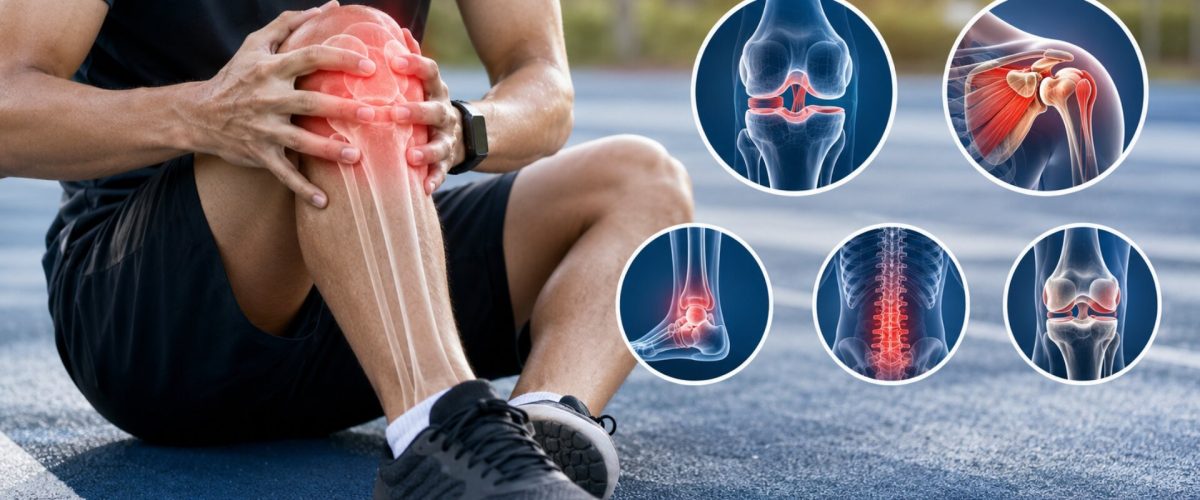
Whether you’re a weekend athlete or a competitive sportsperson, a sudden knee twist, awkward landing, or repetitive joint stress can lead to injuries that don’t always heal on their own. Knowing the difference between a minor strain and a more serious sports injury — and when to see an orthopaedic surgeon — can make a significant difference in your long-term recovery and ability to return to the activities you love.
Common Sports Injuries
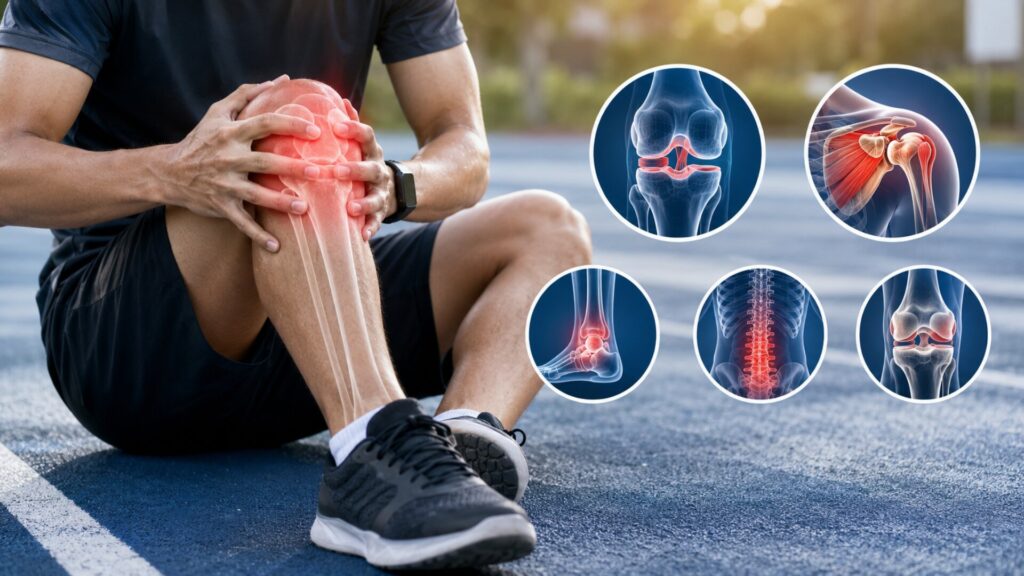
Some sports injuries are minor and improve with rest, while others involve structural damage that requires medical evaluation and, in some cases, sports injury surgery. The most common joint-related sports injuries include:
ACL Tear
The anterior cruciate ligament (ACL) is one of the key stabilizing ligaments of the knee. An ACL tear often occurs during sudden stops, changes in direction, or awkward landings — common in sports like football, basketball, and skiing. Symptoms include a popping sensation at the time of injury, immediate swelling, knee instability, and difficulty bearing weight.
Meniscus Tear
The meniscus is the cartilage that cushions the knee joint. A meniscus tear can result from a sudden twisting motion or from gradual wear in older athletes. Symptoms include pain along the joint line, swelling, a catching or locking sensation, and reduced range of motion.
Knee Ligament Injuries
Beyond the ACL, other knee ligament injuries — including to the PCL, MCL, and LCL — can occur from direct impact or twisting forces during sports. Severity ranges from mild sprains to complete tears requiring surgical repair.
Rotator Cuff Injuries
Common in overhead and throwing sports such as swimming, tennis, and cricket, rotator cuff injuries cause shoulder pain, weakness, and difficulty lifting the arm, particularly overhead.
Cartilage Damage
Repetitive impact or a single traumatic event can damage the smooth cartilage covering joint surfaces, leading to pain, swelling, and a risk of early-onset arthritis if left untreated.
When Should You See an Orthopaedic Surgeon?
Not every sports injury needs a surgeon’s evaluation, but you should seek a consultation with a sports orthopaedic surgeon if you experience:
- A popping or tearing sensation at the time of injury
- Significant swelling that develops within hours of the injury
- Inability to bear weight or use the affected joint normally
- A feeling of instability, giving way, or the joint locking
- Pain that persists beyond a few days despite rest, ice, and basic care
- Visible deformity or suspected fracture
Early evaluation is particularly important for suspected ACL tears, meniscus tears, and significant ligament injuries, as delayed treatment can sometimes lead to further joint damage or a more complicated recovery.
How Sports Injuries Are Diagnosed
- Clinical examination — assessing pain location, swelling, stability, and range of motion
- X-rays — to rule out fractures or bone involvement
- MRI scans — to evaluate soft tissue structures such as ligaments, tendons, and cartilage in detail
- Functional assessment — evaluating how the injury affects movement and sport-specific activities
An accurate diagnosis is the foundation for choosing the right treatment path, whether that involves rest and rehabilitation or surgical repair.
Treatment Options for Sports Injuries
Treatment depends on the type and severity of the injury:
- Conservative treatment — rest, bracing, physiotherapy, and gradual return to activity for mild to moderate injuries
- Arthroscopic surgery — a minimally invasive option commonly used for ACL reconstruction, meniscus repair, and rotator cuff repair, allowing many athletes to return to sport with good functional outcomes
- Open surgical repair — used in select complex cases where arthroscopic techniques are not suitable
Many sports injuries that once required open surgery can now be treated arthroscopically, which links closely to advances in minimally invasive orthopaedic surgery and generally allows for a faster, less painful recovery.
Recovery and Return to Sport
Recovery timelines vary widely depending on the injury and treatment:
- Mild sprains and strains: typically 2–6 weeks of rest and physiotherapy
- Meniscus repair: generally 6–12 weeks before return to sport, depending on the extent of repair
- ACL reconstruction: typically 6–9 months of structured rehabilitation before full return to competitive sport
- Rotator cuff repair: generally 4–6 months, with a gradual, supervised return to overhead activity
A structured, supervised rehabilitation program — guided by both your surgeon and a physiotherapist — is essential for a safe return to sport and for reducing the risk of re-injury.
Preventing Sports Injuries
- Warm up properly before activity and cool down afterward
- Build strength and flexibility in muscles supporting key joints
- Use correct technique and appropriate protective equipment for your sport
- Avoid playing through pain — early attention to minor symptoms can prevent more serious injury
- Allow adequate recovery time between intense training sessions
Frequently Asked Questions
Can an ACL tear heal without surgery?
A torn ACL does not heal on its own due to limited blood supply, though some patients — particularly those who are less active or older — may manage well with physiotherapy alone. Active individuals and athletes are generally advised to consider ACL reconstruction for better knee stability.
How do I know if I have a meniscus tear or just a sprain?
A meniscus tear often causes joint-line pain, swelling, and a catching or locking sensation, while a simple sprain typically improves steadily within days. An orthopaedic evaluation and MRI can confirm the diagnosis.
Is surgery always needed for a sports injury?
No, many sports injuries respond well to rest, physiotherapy, and bracing. Surgery is generally reserved for more significant structural damage, such as complete ligament tears or large meniscus tears.
How soon after a sports injury should I see a doctor?
If you notice significant swelling, instability, inability to bear weight, or pain that doesn’t improve within a few days, it’s best to see an orthopaedic surgeon promptly rather than waiting.
Can athletes return to the same performance level after surgery?
Many athletes do return to their previous performance level after sports injury surgery and structured rehabilitation, though outcomes depend on the specific injury, treatment, and adherence to the recovery program.
Meet Your Surgeon
Dr. Amit Kumar Agarwal is a senior orthopaedic and spine surgeon practicing at Apollo Hospitals and at the Orthopaedic and Spine Clinic. With extensive experience in joint replacement, arthroscopic surgery, and spine care, Dr. Agarwal is known for combining advanced surgical techniques with a conservative, patient-first approach — recommending surgery only when it is genuinely the best path to recovery.
- Specializes in joint replacement (hip, knee, shoulder), arthroscopic surgery, and spine disorders
- Affiliated with Apollo Hospitals, one of India’s leading multi-specialty hospital networks
- Focuses on minimally invasive techniques for faster recovery and reduced post-operative pain
- Known for thorough, individualized evaluation before recommending surgical treatment
Book a Consultation
If you are dealing with a sports injury, ACL tear, meniscus tear, or other joint injury, the first step is an accurate diagnosis. Dr. Amit Kumar Agarwal and the team at the Orthopaedic and Spine Clinic, Apollo Hospitals, offer comprehensive evaluations using advanced imaging and diagnostic tools to determine the most appropriate treatment path for you — surgical or non-surgical.
Schedule a consultation today to discuss your symptoms, get a clear diagnosis, and understand all your treatment options.