
Hip pain has a way of sneaking up on people. It begins as a dull ache in the groin after a long walk, then turns into a limp, then into trouble putting on your shoes. Because hip pain can show up in the thigh or even the knee, it is often mistaken for something else for months.
If you are searching for a total hip replacement surgeon in Delhi, this guide aims to answer the questions that usually come first. It covers what causes hip damage, which symptoms deserve attention, how the surgery is done, what the risks and benefits are, and how recovery works. It also explains what to expect from a consultation with Dr. Prof. Amit Kumar Agarwal at Indraprastha Apollo Hospitals, Sarita Vihar, New Delhi.
What Is Total Hip Replacement?
The hip is a ball-and-socket joint. The ball is the rounded top of the thigh bone, and the socket is a cup-shaped part of the pelvis. Smooth cartilage lines both, letting the joint move freely in several directions.
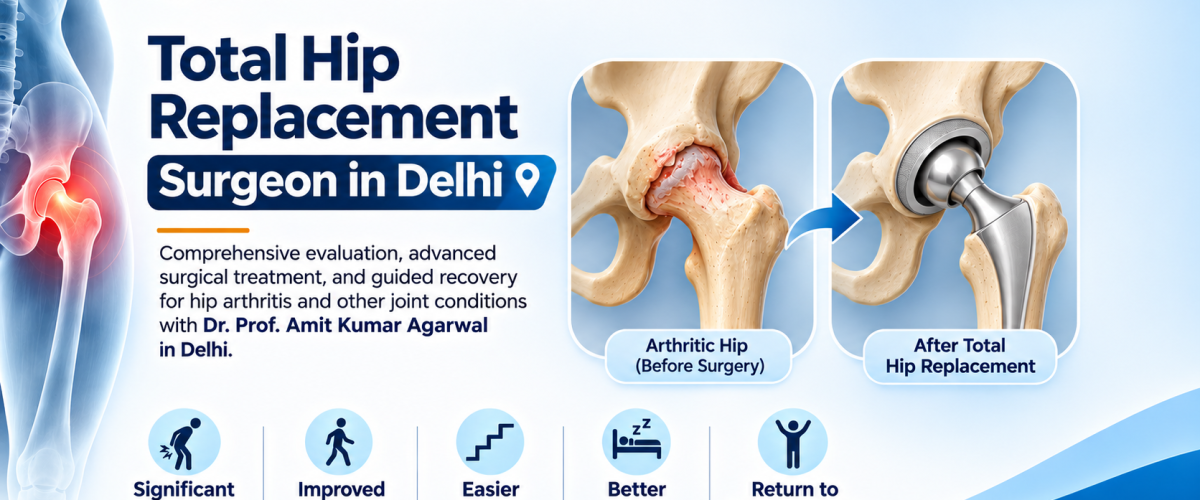
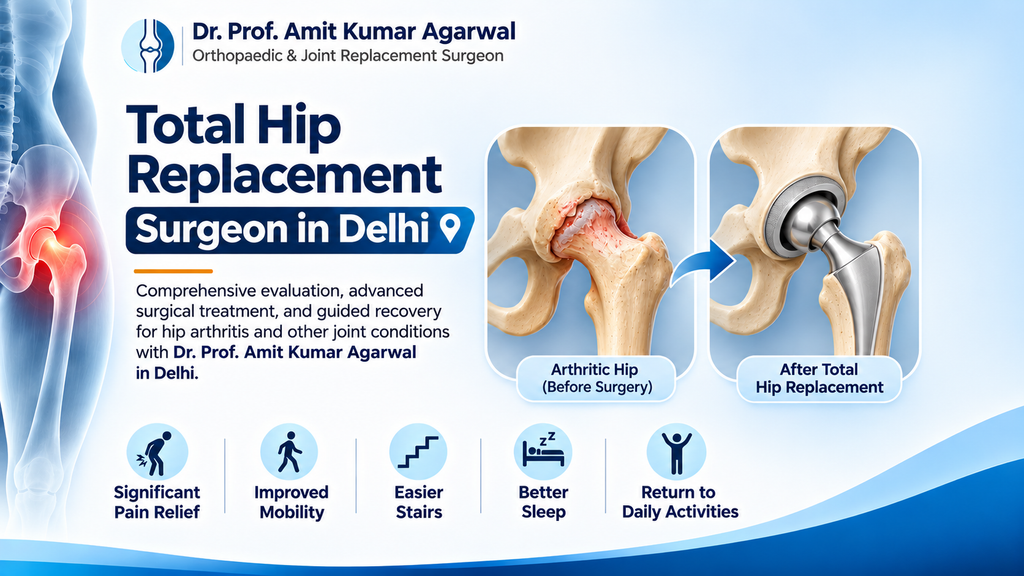
In a total hip replacement, both parts are replaced. The damaged ball is removed and substituted with a metal or ceramic head attached to a stem fixed inside the thigh bone. The socket is prepared and fitted with a new cup, often with a liner made of durable plastic, ceramic, or metal in between. The new joint recreates the ball-and-socket arrangement and aims to restore pain-free movement.
Hip replacement has been performed for many decades, and the materials and techniques have improved considerably over that time. It remains a major operation, and the decision should be made carefully, with a clear picture of your symptoms, scans, and goals.
Common Causes of Hip Joint Damage
Several conditions can lead to a hip that needs replacement:
- Osteoarthritis, the gradual wearing of cartilage, is the most common cause
- Avascular necrosis, where the bone at the top of the thigh bone loses its blood supply and collapses
- Inflammatory arthritis, such as rheumatoid arthritis and ankylosing spondylitis
- Hip fractures, especially fractures of the neck of the thigh bone in older adults
- Developmental conditions, where the socket or ball did not form normally and the joint wears early
- Past injury, including dislocations or damage from road accidents
Knowing the cause matters because it shapes the treatment. A younger person with avascular necrosis, for example, may be managed differently from an older patient with advanced arthritis. This is one reason a proper examination and imaging come before any recommendation.
Not every painful hip needs a replacement. Early arthritis may respond to medication, exercises that strengthen the muscles around the hip, weight management, and walking aids. In some younger patients with early avascular necrosis, procedures that aim to preserve the natural joint may be considered. Replacement is generally discussed when damage is advanced and quality of life is clearly affected.
Symptoms That May Require Hip Replacement Evaluation
You do not need to wait for severe pain before getting the hip assessed. Symptoms that call for an evaluation include:
- Pain in the groin, buttock, or outer thigh, sometimes spreading to the knee
- Stiffness, particularly in the morning or after sitting
- A limp or a shortened walking distance
- Difficulty putting on socks and shoes, getting in and out of a car, or climbing stairs
- Pain at night or while resting
- A catching or grinding sensation
- Little relief from medication and exercise
Some of these symptoms overlap with back and knee problems, so a thorough examination is important. Sometimes the source of the pain is the spine, and sometimes it is the hip itself. Getting the diagnosis right saves months of ineffective treatment. For a broader look at the options, see our page on hip arthritis treatment.
How Is Total Hip Replacement Performed?
The operation is carried out under spinal or general anaesthesia and usually takes about one to two hours. Your anaesthetist will advise on the most suitable option.
The surgeon reaches the hip joint through an incision, with the exact position depending on the surgical approach chosen, such as posterior, lateral, or anterior. The damaged ball is removed from the top of the thigh bone, and the hip socket is cleaned and shaped to hold the new cup. A stem is placed into the thigh bone, topped with a new head that fits into the cup. The surgeon checks stability, leg length, and range of movement before closing.
Implants may be cemented or uncemented, and the choice depends on bone quality, age, and the specific condition. Each approach has its own benefits and trade-offs, and the best one is the one your surgeon is most experienced with and that fits your anatomy. You are welcome to ask why a particular approach is being suggested.
Before surgery, you will have blood tests, an ECG, and a review of other conditions such as diabetes or heart disease. Your medicines, including blood thinners, will be checked. Exercises to strengthen the hip and thigh muscles beforehand often make early recovery easier.
Potential Benefits and Risks of Hip Replacement
Benefits. Most patients notice a significant reduction in pain, along with an easier time walking, climbing stairs, and carrying out daily tasks. Hip replacement is widely regarded as one of the more successful joint operations for restoring comfort.
Risks. As with any major operation, there are risks. They include infection, blood clots, dislocation of the new joint, a difference in leg length, loosening or wear of the implant over time, nerve or blood vessel injury, and anaesthetic complications. Most of these are uncommon, and precautions are taken to reduce them.
No surgeon can guarantee a perfect result. What you can expect is a clear explanation of what is likely in your case, along with advice on how to improve your outcome, for instance by controlling blood sugar, quitting smoking, and following your rehabilitation programme.
Recovery and Rehabilitation After Surgery
Recovery begins almost straight away. Most patients are helped out of bed and onto their feet with a walker or crutches within a day or so of surgery. Pain relief, wound care, and clot prevention are part of the hospital stay, which usually lasts a few days.
Your surgeon and physiotherapist may advise certain precautions for a period, such as avoiding deep bending, crossing the legs, or twisting on the operated side. These depend on the approach used and help protect the new joint while the tissues heal. Do ask what applies to you, particularly if you usually sit on the floor, use an Indian-style toilet, or squat.
Physiotherapy builds strength and balance over the following weeks. Walking aids are reduced step by step, and many people return to light activities within a few weeks. Gains continue for several months. Driving, travel, and work all depend on your progress and your surgeon’s advice.
It helps to prepare your home in advance. A chair with a firm seat and armrests, a raised toilet seat, a grabber for picking things up, and clear walkways free of rugs and cables make a real difference in the early weeks. Ask a family member to be around for the first stretch if possible.
Call your surgeon promptly if you notice fever, a wound that becomes red or starts discharging, calf pain or swelling, sudden severe hip pain, or a sense that the leg has changed position.
Finding a Hip Replacement Specialist in Delhi
Choosing a surgeon is a personal decision. Look for someone who examines you carefully, reviews your scans, discusses non-surgical choices honestly, explains risks plainly, and is practising in a hospital with proper support services. It is also fine to ask for a second opinion.
Dr. Prof. Amit Kumar Agarwal consults at Indraprastha Apollo Hospitals, Sarita Vihar, New Delhi, where imaging, anaesthesia, and rehabilitation services are part of the hospital setting. A hip replacement consultation includes your history, an examination, a review of any reports you bring, and a discussion of treatment options. Add verified qualifications and hip replacement experience here.
Read about arthroplasty more broadly, visit the general orthopedic care page, or book through the appointment page or by calling verified phone number. Bring earlier X-rays, MRI reports, and a list of your medicines.
Frequently Asked Questions
How do I know if my pain is from the hip or the back?
Hip problems usually cause pain in the groin or outer thigh and stiffness with movement, while back problems may cause pain that travels down the leg. An examination and imaging help separate the two.
How long does a hip replacement last?
Many hip implants last 15 to 20 years or longer, depending on your activity, weight, and the implant used.
When can I walk after hip replacement?
Most patients are encouraged to stand and take steps with support within a day or so of surgery.
Can I sit cross-legged or squat afterwards?
This depends on the surgical approach and your surgeon’s advice. Some positions are restricted for a time, so ask before surgery.
Hip pain getting in the way? Schedule an orthopedic consultation with Dr. Prof. Amit Kumar Agarwal at Indraprastha Apollo Hospitals, Sarita Vihar, New Delhi.