
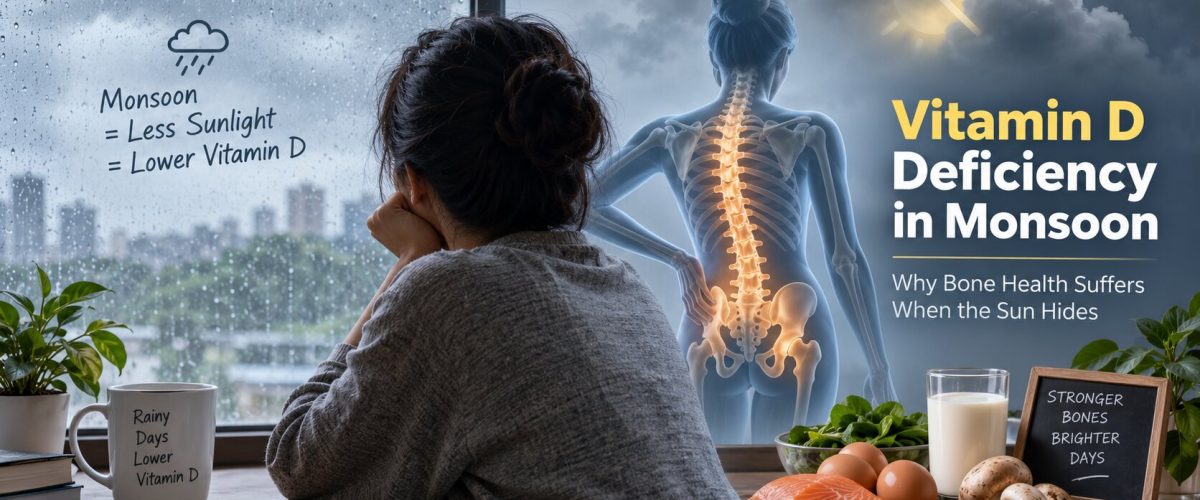
It’s easy to overlook, but one of the quieter effects of monsoon is its impact on vitamin D levels. With overcast skies replacing direct sunlight for weeks at a time, many people unknowingly see their vitamin D drop during the rainy season — and since this vitamin plays a central role in bone health, the consequences can extend well beyond the monsoon months if left unaddressed.
Why Monsoon Increases the Risk of Vitamin D Deficiency
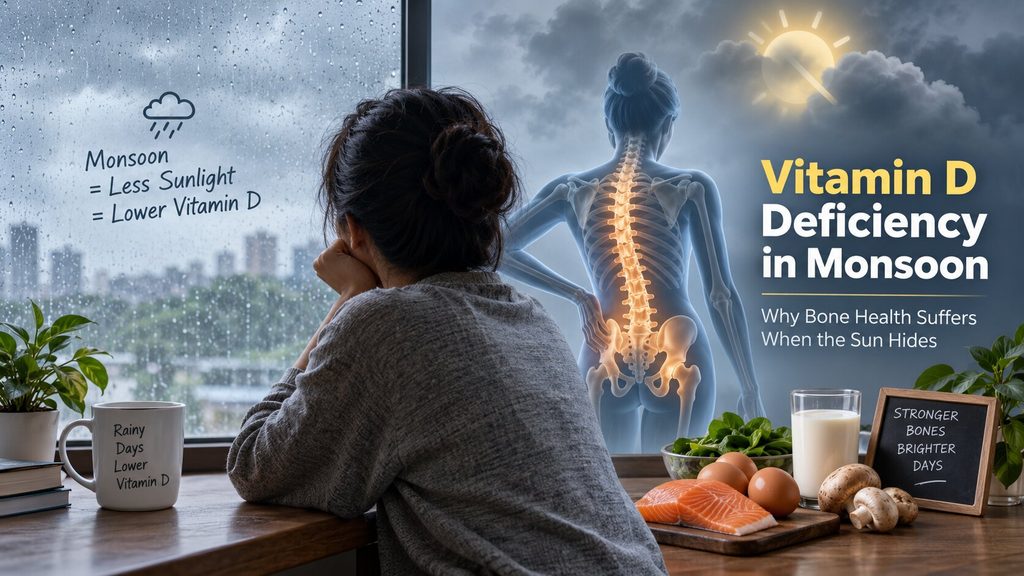
Vitamin D is unique among vitamins because the body produces most of it through skin exposure to sunlight, rather than getting it primarily from food. During monsoon, cloud cover significantly reduces UVB radiation reaching the skin, and people also tend to spend more time indoors to avoid the rain. Combined, these factors can lower vitamin D synthesis considerably compared to sunnier months.
In a country like India, where vitamin D deficiency is already surprisingly common year-round — even in sunny cities — monsoon tends to make an existing problem more pronounced.
The Role of Vitamin D in Bone Health
Vitamin D helps the body absorb calcium from the intestines. Without adequate vitamin D, even a calcium-rich diet doesn’t translate into strong bones, because the calcium simply isn’t absorbed efficiently. Over time, this can lead to:
- Reduced bone density, increasing fracture risk
- Osteomalacia (softening of bones) in adults
- Worsened symptoms in people who already have osteoporosis
- Increased general body aches, particularly around the lower back, hips, and legs
- Muscle weakness, which itself raises the risk of falls — a particular concern during the already slippery monsoon season
Signs and Symptoms of Vitamin D Deficiency
- Persistent fatigue that doesn’t improve with rest
- Generalised bone or muscle pain, especially in the back and legs
- Muscle weakness or cramps
- Frequent illness, as vitamin D also supports immune function
- Mood changes, including low mood, which some patients report worsens during prolonged cloudy weather
These symptoms are easy to mistake for general monsoon fatigue, which is why deficiency often goes unnoticed until a blood test reveals it.
Who Is Most at Risk?
- People who work indoors for most of the day, with minimal sun exposure even outside monsoon
- Individuals with darker skin, which requires more sun exposure to produce the same amount of vitamin D
- Older adults, whose skin is naturally less efficient at synthesising vitamin D
- People who consistently use high-SPF sunscreen or fully cover up outdoors
- Those with limited dietary intake of vitamin D-rich foods
- Patients already diagnosed with osteoporosis or a history of fractures
How to Maintain Vitamin D Levels During Monsoon
1. Catch Sunlight When You Can
Even on partly cloudy days, brief sun exposure — around 15-20 minutes on the arms and face during breaks in the rain — can help. Late morning hours, when UVB is present even through light cloud cover, are generally most effective.
2. Include Vitamin D-Rich Foods
- Fatty fish such as salmon and mackerel
- Egg yolks
- Fortified milk and cereals
- Mushrooms exposed to sunlight during growth
3. Consider Supplementation, With Medical Guidance
For many people, diet and limited sun exposure alone aren’t enough to maintain adequate levels, particularly during monsoon. A simple blood test (25-hydroxy vitamin D) can confirm your levels, and a doctor can recommend an appropriate supplementation dose if needed — self-prescribing high-dose supplements without testing is not advisable.
4. Pair It With Adequate Calcium
Vitamin D and calcium work together. Dairy products, leafy greens, and sesame seeds are good dietary sources of calcium to combine with adequate vitamin D levels.
Long-Term Risks of Untreated Deficiency
Chronic, unaddressed vitamin D deficiency doesn’t just cause temporary aches — over years, it contributes meaningfully to osteoporosis, increases fracture risk, and can slow healing if you do sustain an injury. For patients who have already had a fracture or joint surgery, low vitamin D can also affect bone healing time.
When to Get Tested and See a Doctor
It’s worth getting your vitamin D levels checked if you experience persistent bone or muscle pain, unexplained fatigue, or if you fall into one of the higher-risk groups listed above — particularly if these symptoms consistently worsen during the monsoon months.
Frequently Asked Questions
Can I get enough vitamin D from food alone during monsoon? It’s difficult, since very few foods naturally contain significant vitamin D. Sun exposure remains the primary source for most people, which is why levels often dip during extended cloudy periods.
How long does it take to correct a vitamin D deficiency? With appropriate supplementation guided by a doctor, levels typically improve over 8-12 weeks, though this varies based on how low the initial levels were.
Is it safe to take vitamin D supplements without a blood test? It’s best to test first. Vitamin D is fat-soluble, meaning excess amounts can accumulate in the body, so dosage should ideally be guided by your actual blood levels.
Conclusion
Monsoon’s cloud cover has a real, measurable effect on vitamin D levels — and by extension, on bone and muscle health. The good news is that it’s easily identified with a simple blood test and easily corrected with the right combination of sun exposure, diet, and supplementation where needed.
Concerned about bone health this monsoon? Consult Dr. (Prof.) Amit Kumar Agarwal for a bone health assessment and personalised guidance on maintaining healthy vitamin D and calcium levels.